Your machines. Your models. Your call.

Your agents. Rival checks.
OmniConflux is designed to coordinate your agents on your machines, have a different vendor check each task, and leave you to decide what ships.
Pre-register for the closed betaClosed beta. Only your work email and your goal are required.
Any model. Any harness. Your login, never ours.
Plug in what you already run. OmniConflux is designed to run any command-line agent and bring models in three ways, so joining a fleet does not mean replacing your setup.
Command line
Any CLI agent, run as a process.
MCP
Designed for deeper control: state, handoff, approvals.
ACP
The same deeper control.
One fleet socket.
Your login.The vendor’s own tool, on your machine, as the vendor allows.
Your API key.Direct to the vendor.
Your local model.Ollama or llama.cpp on hardware you own.
No lossless context across vendors. Agents will share work through git worktrees and files, and some need a short setup step.
Your machines are the fleet.
OmniConflux is designed to pool the hardware you already own for agent work: each paired machine reports what it can offer, and a coordinator hands each task to the machine that fits. Your tower is not a paperweight.
Sample fleet. Sample data, not a live node list.
One goalMigrate billing to the new API.
- Your laptopCLI agent, your login
- Your towerMCP agent
- Your serverCLI agent, API key
- Your GPULocal model

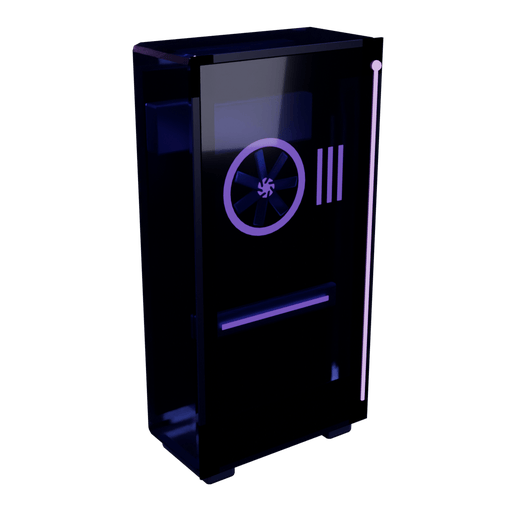
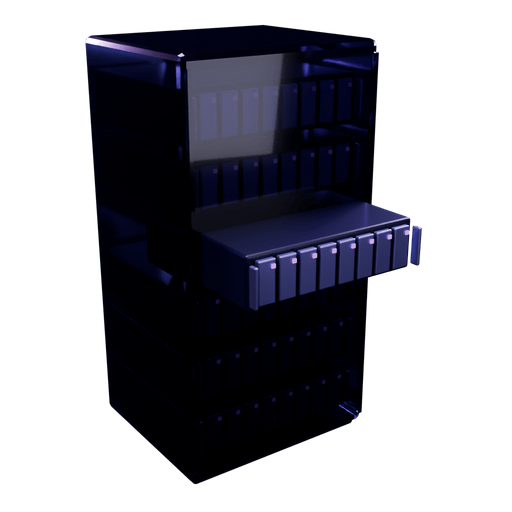
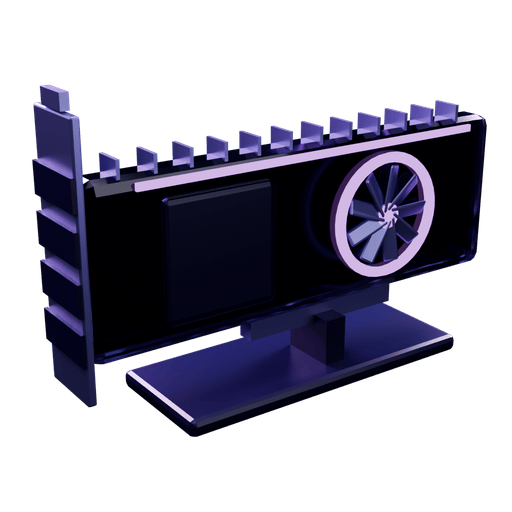
Each machine will dial out to the relay, so a box behind a home router needs no open inbound port.
A rival from another vendor returned 19 defects in this site’s build. The builder revised the pages and earned APPROVE. OmniConflux is designed around that independent check.
A rival checks every diff.
Recorded run P1aBuilderClaude familyWrites the change
Real time, UTC
21 min 22 s
00:22 / 00:22Recorded stages and UTC times
- next-to-last round, time not retained
- rework 13:19:29, 3 min 42 s (until 13:23:11)
- commit 1c5d4dc 13:22:54
- last round 13:31:23, 9 min 28 s (until 13:40:51)
Step 22 / 22lane approved
Lane P1a
- 00:00
goal: replace the StubPage stubs with real server rendered content for: use cases, use cases computer use voice, glossary, press, status, enterprise, earn network governance. Read first: <file> (including the v2 addendum and "AJ decisions 2026-10-01"), <file> (surface specs) and the existing page <file> for component patterns (Section, Container, Card, Eyebrow, Button, JsonLd, lib/schemas).
- 00:01
next-to-last round of verification, recovered from its report in the rework prompt; it checked dbc512a [agent C: Gemini family]
- 00:02
$ npm ci && npx next typegen && npx tsc --noEmit && npm run build && node scripts/check-copy.mjs [agent C: Gemini family]
Reported result:exit 0The copy gate passed (42 routes) and all 47 static pages were generated.
- 00:03
$ node scripts/check-ssr.mjs [agent C: Gemini family]
Reported result:against next start: passed (42 routes, 126 requests, HTML TTFB p95 5.2 ms).
- 00:04
verdict: REWORK, 19 defects [agent C: Gemini family]
- use cases computer use voice: Line 19: the intent "compiles... into a multi-step execution graph across your fleet". The real voice tool sends a command to a single harness.
- use cases computer use voice: Line 26: "queries the operating system accessibility tree and browser DOM structure... within an isolated sandbox window". Nothing implements this.
- use cases computer use voice: Line 33: "Every cursor movement... streamed securely to your phone". Keep "every action shown", which the task asked for, but drop the streaming and security mechanism.
- use cases computer use voice: Line 40: the verifier "confirms... no unintended state changed, and tests reproduce reliably". This overclaims; the sibling page says verification "is not a guarantee".
- use cases computer use voice: Line 53: "file deletion or external network requests require explicit confirmation" is stated as a fixed behaviour with no source.
- use cases computer use voice: Lines 56-58: Remote Abort Controls have no source.
- use cases computer use voice: Lines 61-63 and 104: sandbox boundaries, "dedicated secondary displays, virtual desktop spaces, or headless sandboxes" have no source.
- use cases computer use voice: Line 71: "prioritizes native CLI and DOM manipulation" has no source.
- use cases: Line 29: "deterministic reproducer scripts" as a guaranteed outcome.
- use cases: Line 30: "AST diff inspection".
- use cases: Line 55: "strictly bounded operating system sandboxes".
- use cases: Line 74 (FAQ): the verifier "performs AST analysis, and confirms deterministic behavior".
- use cases: Lines 84 and 112-113: the intro says "every step" is verified (every agent task is the backed claim), and the FAQ says critical file changes and network requests trigger approval prompts. Neither is backed.
- enterprise: Line 112: the verifier is "executing your internal CI test suites and AST checks". Same AST claim as above.
- enterprise: Lines 31-36: the Managed Cloud Fleet is described in present tense ("provisioned, monitored, and scaled", "dedicated sandboxing per worker node", "GPU acceleration options"). But status (<file>) and this page's own line 94 say it is not live or "planned". Mark it as planned.
- glossary: "built natively into OmniConflux surfaces" presents Aura as shipped. status lists Aura as Not Live. Say "planned" or "designed to".
- status: "agents operate entirely on-device... does not depend on cloud API uptime for core orchestration or verification" is a product behaviour claim about software that has not shipped. Hedge it ("designed to") or drop it.
- earn network governance: Line 35: "Granular category blocklists" is not in the Aura <file>, which lists off by default, an inspector and one toggle.
- earn network governance: Advertiser vetting is thin: only "vetted developer tool affiliate programs" at line 42. The task asked how vetting works. Add one or two plain lines, for example that creatives are text-only with no code, plus review against advertise policies.
- 00:05
builder starts on machine 1 [agent B: Claude family]
- 00:06
rework starts [agent B: Claude family]
- 00:07
$ npm ci && npx next typegen && npx tsc --noEmit && npm run build && node scripts/check-copy.mjs [agent B: Claude family]
Reported result:exit 0The copy gate passed on 42 routes.
- 00:08
$ node scripts/check-ssr.mjs [agent B: Claude family]
Reported result:against next start passed: 42 routes, 126 requests, HTML TTFB p95 5.3 ms.
- 00:09
use cases computer use voice: I removed the execution graph, accessibility tree and DOM inspection, phone streaming, remote abort, sandbox and secondary-display claims, the "prioritizes CLI and DOM" line, and the verifier "confirms no unintended state changed" line. The page now states only the two backed facts: Voice is designed to transcribe locally with whisper.cpp and send the text as a command to one harness. [agent B: Claude family]
- 00:10
use cases: removed AST inspection, "deterministic reproducer scripts", "strictly bounded operating system sandboxes", and the approval prompts for file and network actions. The intro and the "Checked by" lines now say "every agent task gets a verifier from a different vendor". The FAQs use "designed to", "planned" and "documented at launch". I also toned down the unbacked "ten networks, safe-zone" line in the social card. [agent B: Claude family]
- 00:11
enterprise: Removed AST from the FAQ and from the audit-log roadmap item. [agent B: Claude family]
- 00:12
glossary: Aura is now "A planned... network..., designed around on-device topic classification. Not live yet." The contextual ad broker entry is reworded the same way. [agent B: Claude family]
- 00:13
status: the cloud-outage FAQ now says "designed so that..." and notes the client software is not released. [agent B: Claude family]
- 00:14
earn network governance: The whole page now uses "designed", "planned" or "will". [agent B: Claude family]
- 00:15
commit 1c5d4dc: Rewrite unbacked capability claims on P1a pages as planned or designed
- 00:16
last round of verification starts on 1c5d4dc [agent C: Gemini family]
- 00:17
$ npx next typegen && npx tsc --noEmit && npm run build [agent C: Gemini family]
Reported result:passed with 0 errors across all 47 routes (42 static prerendered routes + dynamic <path>).
- 00:18
$ node scripts/check-copy.mjs [agent C: Gemini family]
Reported result:passed cleanly.
- 00:19
$ node scripts/check-ssr.mjs [agent C: Gemini family]
Reported result:against next start passed (42 static routes, 126 requests, HTML TTFB p95 5.2 ms).
- 00:20
verdict: APPROVE [agent C: Gemini family]
- 00:21
lane P1a approved
VerifierGemini familyDifferent vendor
The original claim
built natively into OmniConflux surfaces
Gemini family: presents Aura as shipped. status lists Aura as Not Live. Say "planned" or "designed to".
The builder revised it
A planned... network..., designed around on-device topic classification. Not live yet.
Next-to-last round reported running
- $ npm ci
- $ npx next typegen
- $ npx tsc --noEmit
- $ npm run build
- $ node scripts/check-copy.mjs
- $ node scripts/check-ssr.mjs
REWORK
19 defects, each with a reason.
The change goes back.
Last round reported the same checks
- $ npx next typegen
- $ npx tsc --noEmit
- $ npm run build
- $ node scripts/check-copy.mjs
- $ node scripts/check-ssr.mjs
APPROVE
Reworked. Checked again.
No defects.
19 defects back to the builder
- 1The draft goes out for review.
- 2A verifier from another vendor runs the checks.
- 319 defects come back, each with a reason.
- 4The builder rewrites the flagged lines.
- 5The checks run again. APPROVE.
Quoted from P1a; paths, hosts and file names are redacted, and earlier rounds were not retained. Compressed playback. Product names are trademarks of their owners.
Read the reviewed diff
- glossary
- Removed:
built natively into OmniConflux surfacesGemini family: presents Aura as shipped. status lists Aura as Not Live. Say "planned" or "designed to".
- Added:
A planned... network..., designed around on-device topic classification. Not live yet. - use cases computer use voice
- Removed:
compiles... into a multi-step execution graph across your fleetGemini family: The real voice tool sends a command to a single harness.
- Removed:
Every cursor movement... streamed securely to your phoneGemini family: Keep "every action shown", which the task asked for, but drop the streaming and security mechanism.
- Claude family: I removed the execution graph, accessibility tree and DOM inspection, phone streaming, remote abort, sandbox and secondary-display claims, the "prioritizes CLI and DOM" line, and the verifier "confirms no unintended state changed" line.
Verification is a check with recorded evidence, not a promise that every result is correct.
Run context, sources and timing
Recorded run: the last two rounds of the review. Earlier rounds were not retained.
- Recorded
- 13:19:29 to 13:40:51 UTC on 1 October 2026, 21 min 22 s. The next-to-last round ran earlier; its time was not retained.
- Playback
- Compressed: the playback clock counts one second per step. Playback holds longest on the REWORK, so its 19 defects can be read. Steps with a recorded time show it under the playback clock.
- Checked
- Commit dbc512a in the next-to-last round, commit 1c5d4dc in the last round.
- Builder
- Claude family. Claude Code, model flag opus.
- Verifier
- Gemini family. Antigravity CLI, model not recorded.
- Results
- Exit codes and results are quoted from each agent's own report, where it states them. Paths, hosts and file names are redacted.
Swarm ledger
Lanes with surviving review logs from the build of this site.
40 lanes. 61 verification rounds.
In those logs the rivals returned 33 REWORK verdicts and 28 APPROVE. Counted separately: 6 more REWORK verdicts survive only inside the prompts of the reworks they caused.
Ledger: ledger.json, 276 findings- C1: 3 REWORK
- F2: 1 APPROVE
- I1: 1 REWORK, 1 REWORK from a prompt
- K1: 1 APPROVE
- L1: 1 REWORK, 1 REWORK from a prompt
- L3: 1 APPROVE
- L4: 1 APPROVE, 1 REWORK from a prompt
- L5: 1 APPROVE
- L6: 1 APPROVE, 1 REWORK from a prompt
- L7: 1 APPROVE
- L9: 1 APPROVE
- P1a: 1 APPROVE, 1 REWORK from a prompt
- P1b: 1 APPROVE
- R1: 1 APPROVE
- R2: 1 APPROVE
- R3: 2 REWORK
- R4: 1 APPROVE
- R5: 3 REWORK
- R6: 2 REWORK, 1 APPROVE
- R7a: 3 REWORK
- R7b: 4 REWORK
- R7c: 1 REWORK
- R8: 2 REWORK
- S1: 1 APPROVE
- S2: 1 APPROVE
- S3: 1 APPROVE, 1 REWORK from a prompt
- S4: 1 APPROVE
- S5: 1 APPROVE
- S6: 1 APPROVE
- SC1: 1 APPROVE
- SC2a: 2 REWORK, 1 APPROVE
- SC2b: 1 APPROVE
- SC3: 1 APPROVE
- SC3b: 1 APPROVE
- SC4: 1 APPROVE
- W2: 4 REWORK
- W3: 1 APPROVE
- W4: 2 REWORK
- W5: 1 APPROVE
- W6: 3 REWORK
R7b 4 REWORK
C1 to W6, by lane name. Marks count verdicts; they do not show order.Most rounds: R7b and W2
Six defects the verifiers caught
P1aAura described as shipped
glossary: "built natively into OmniConflux surfaces" presents Aura as shipped. status lists Aura as Not Live. Say "planned" or "designed to".
P1aUnsupported browser and system access
use cases computer use voice: Line 26: "queries the operating system accessibility tree and browser DOM structure... within an isolated sandbox window". Nothing implements this.
L4Branch did not merge or compile
The branch doesn't merge cleanly or compile against current main. L1 merged its server component (ba69560, 23:21) 14 minutes before L4's last commit (23:35), and L4 never rebased onto it.
L4Live mark would not start
After the merge, the live mark would never start on any page.
L4Ring rendered as an overexposed blur
The live ring renders as an overexposed blur. The strands can't be told apart. This happens on SwiftShader and on a real GTX 1060, while the reference renders a crisp braid on the same GPU.
I1Decorative icons repeated alt text
No icon is marked decorative, so screen readers repeat the same long alt text.
How the ledger is counted
Counts are lower bounds where logs were overwritten. Surviving verify files and embedded prompt reports are counted separately. Git counts cover only main..swarm lane ranges; merged commits are absent. Ordinary commits do not establish review rounds. Do not add these overlapping sources together.
Verify these files
Every recorded run file and the ledger is listed with its SHA-256 digest in a manifest signed with Ed25519. The verify.mjs script downloads the live files, recomputes each digest and checks the signature, using only Node and its built-in crypto module.
- P1a.json
sha256 48578f11a41ca0db5a1b52a54da566fcc720f42e74080cb23e3428dcfe327719Earlier rounds were not retained. The next-to-last round is recovered from its report in the rework prompt; its time was not retained.- ledger.json
sha256 dc65c01954eb5b580f7894dc3927c885e81d6522b7785746cca087b4b9960e69Counts are lower bounds where logs were overwritten. REWORK verdicts recovered from the prompts of the reworks they caused, counted separately: 6.
curl -O https://omniconflux.com/runs/verify.mjs && node verify.mjs
A valid signature shows these files are unchanged since they were signed on 4 October 2026. It does not restore records that were lost, and it does not check what the agents reported.
Key fingerprint, SHA-256: 4a11559edde18406f671da49fe20a9dd7df4e735e19c55cb2614c3790b9014d7
Full transcript, 22 steps
RECORDED RUN: the last two rounds of the review
- 00:00
goal: replace the StubPage stubs with real server rendered content for: use cases, use cases computer use voice, glossary, press, status, enterprise, earn network governance. Read first: <file> (including the v2 addendum and "AJ decisions 2026-10-01"), <file> (surface specs) and the existing page <file> for component patterns (Section, Container, Card, Eyebrow, Button, JsonLd, lib/schemas).
- 00:01
next-to-last round of verification, recovered from its report in the rework prompt; it checked dbc512a [agent C: Gemini family]
- 00:02
$ npm ci && npx next typegen && npx tsc --noEmit && npm run build && node scripts/check-copy.mjs [agent C: Gemini family]
Reported result:exit 0The copy gate passed (42 routes) and all 47 static pages were generated.
- 00:03
$ node scripts/check-ssr.mjs [agent C: Gemini family]
Reported result:against next start: passed (42 routes, 126 requests, HTML TTFB p95 5.2 ms).
- 00:04
verdict: REWORK, 19 defects [agent C: Gemini family]
- use cases computer use voice: Line 19: the intent "compiles... into a multi-step execution graph across your fleet". The real voice tool sends a command to a single harness.
- use cases computer use voice: Line 26: "queries the operating system accessibility tree and browser DOM structure... within an isolated sandbox window". Nothing implements this.
- use cases computer use voice: Line 33: "Every cursor movement... streamed securely to your phone". Keep "every action shown", which the task asked for, but drop the streaming and security mechanism.
- use cases computer use voice: Line 40: the verifier "confirms... no unintended state changed, and tests reproduce reliably". This overclaims; the sibling page says verification "is not a guarantee".
- use cases computer use voice: Line 53: "file deletion or external network requests require explicit confirmation" is stated as a fixed behaviour with no source.
- use cases computer use voice: Lines 56-58: Remote Abort Controls have no source.
- use cases computer use voice: Lines 61-63 and 104: sandbox boundaries, "dedicated secondary displays, virtual desktop spaces, or headless sandboxes" have no source.
- use cases computer use voice: Line 71: "prioritizes native CLI and DOM manipulation" has no source.
- use cases: Line 29: "deterministic reproducer scripts" as a guaranteed outcome.
- use cases: Line 30: "AST diff inspection".
- use cases: Line 55: "strictly bounded operating system sandboxes".
- use cases: Line 74 (FAQ): the verifier "performs AST analysis, and confirms deterministic behavior".
- use cases: Lines 84 and 112-113: the intro says "every step" is verified (every agent task is the backed claim), and the FAQ says critical file changes and network requests trigger approval prompts. Neither is backed.
- enterprise: Line 112: the verifier is "executing your internal CI test suites and AST checks". Same AST claim as above.
- enterprise: Lines 31-36: the Managed Cloud Fleet is described in present tense ("provisioned, monitored, and scaled", "dedicated sandboxing per worker node", "GPU acceleration options"). But status (<file>) and this page's own line 94 say it is not live or "planned". Mark it as planned.
- glossary: "built natively into OmniConflux surfaces" presents Aura as shipped. status lists Aura as Not Live. Say "planned" or "designed to".
- status: "agents operate entirely on-device... does not depend on cloud API uptime for core orchestration or verification" is a product behaviour claim about software that has not shipped. Hedge it ("designed to") or drop it.
- earn network governance: Line 35: "Granular category blocklists" is not in the Aura <file>, which lists off by default, an inspector and one toggle.
- earn network governance: Advertiser vetting is thin: only "vetted developer tool affiliate programs" at line 42. The task asked how vetting works. Add one or two plain lines, for example that creatives are text-only with no code, plus review against advertise policies.
- 00:05
builder starts on machine 1 [agent B: Claude family]
- 00:06
rework starts [agent B: Claude family]
- 00:07
$ npm ci && npx next typegen && npx tsc --noEmit && npm run build && node scripts/check-copy.mjs [agent B: Claude family]
Reported result:exit 0The copy gate passed on 42 routes.
- 00:08
$ node scripts/check-ssr.mjs [agent B: Claude family]
Reported result:against next start passed: 42 routes, 126 requests, HTML TTFB p95 5.3 ms.
- 00:09
use cases computer use voice: I removed the execution graph, accessibility tree and DOM inspection, phone streaming, remote abort, sandbox and secondary-display claims, the "prioritizes CLI and DOM" line, and the verifier "confirms no unintended state changed" line. The page now states only the two backed facts: Voice is designed to transcribe locally with whisper.cpp and send the text as a command to one harness. [agent B: Claude family]
- 00:10
use cases: removed AST inspection, "deterministic reproducer scripts", "strictly bounded operating system sandboxes", and the approval prompts for file and network actions. The intro and the "Checked by" lines now say "every agent task gets a verifier from a different vendor". The FAQs use "designed to", "planned" and "documented at launch". I also toned down the unbacked "ten networks, safe-zone" line in the social card. [agent B: Claude family]
- 00:11
enterprise: Removed AST from the FAQ and from the audit-log roadmap item. [agent B: Claude family]
- 00:12
glossary: Aura is now "A planned... network..., designed around on-device topic classification. Not live yet." The contextual ad broker entry is reworded the same way. [agent B: Claude family]
- 00:13
status: the cloud-outage FAQ now says "designed so that..." and notes the client software is not released. [agent B: Claude family]
- 00:14
earn network governance: The whole page now uses "designed", "planned" or "will". [agent B: Claude family]
- 00:15
commit 1c5d4dc: Rewrite unbacked capability claims on P1a pages as planned or designed
- 00:16
last round of verification starts on 1c5d4dc [agent C: Gemini family]
- 00:17
$ npx next typegen && npx tsc --noEmit && npm run build [agent C: Gemini family]
Reported result:passed with 0 errors across all 47 routes (42 static prerendered routes + dynamic <path>).
- 00:18
$ node scripts/check-copy.mjs [agent C: Gemini family]
Reported result:passed cleanly.
- 00:19
$ node scripts/check-ssr.mjs [agent C: Gemini family]
Reported result:against next start passed (42 static routes, 126 requests, HTML TTFB p95 5.2 ms).
- 00:20
verdict: APPROVE [agent C: Gemini family]
- 00:21
lane P1a approved
You stay in control.
In the design, the last word is yours: not the agent’s, and not the rival’s.
Build your fleet.
Pick machines and a model for each, send a sample goal, and watch a rival from another vendor return REWORK, then APPROVE. No signup.
SAMPLE RUN. Sample data. No real agents run. Nothing you choose here is sent unless you claim a fleet seat and save it.
Pick your models.
Choose a model vendor on each machine. The rival that checks the work runs a vendor no builder runs.
- LaptopBuilder
- Desktop towerRival
 Laptop
 Desktop tower
Press Run sample to watch your fleet work.
Billing sample: Laptop drafts with Claude family. Desktop tower reviews with Gemini family.
- The goal fans out to every builder machine.
- The rival, on a vendor no builder runs, checks the work.
- It sends the work back with a reason, or approves it.
- You approve last.
SAMPLE DATA. Not a real run.
Pre-register without the sampleSample only. In the design, finished work comes back for your approval. Phone approval is planned. Nothing happened here.
Vendor names are trademarks of their owners. Naming a vendor describes designed compatibility, not endorsement.
No landlord.
Your keys.
Your models.

Your work is designed to land as commits in your own git repositories and files on your own disks, so you can swap a model, change a harness or leave without moving anything. Your work was never ours to keep.
Pre-register for the closed beta.
Start with an email and a goal. Everything after that is optional.
Questions before you register
What is OmniConflux?
An agent platform designed around machines you own, models you choose, independent verification, on-device context and voice. It is in closed beta, and the client software is not released yet.
How is agent work checked?
The design sends each task to a verifier from a different vendor, which returns approve or rework with reasons. It is a check with recorded evidence, not a guarantee that every result is correct.
What does private by default mean?
The design keeps code, files and local-model work on machines you control. When you choose a cloud model, that vendor receives what the agent sends it, directly from your machine, under its own terms.
Does OmniConflux lock me into one AI vendor?
Not by design. The design brings models in three ways: the vendor’s own tool on your machine under your login, your own API key, or local models on your hardware.
Can I use the AI subscription I already have?
On your own machines: OmniConflux is designed to run the vendor’s own installed tool under your login, as the vendor allows. By design, it does not pool personal accounts or pass a seat login through a hosted backend.
Which agents does it run?
Any command-line agent is designed to run at the process level. Agents that speak MCP or ACP are designed to get deeper control over state, handoff and approvals. In the design, agents share work through git worktrees and files, and some agents need a short setup step.
Can you run the fleet for me?
Self-serve is the default design. A managed fleet is planned, not live, and is a talk-to-us option. It will run only on your API keys or enterprise tokens, never on personal subscription seats.
Can I download OmniConflux today?
No. OmniConflux is in closed beta and the client software is not released. Pre-registration is required. Share your email and what you want your agents to work on, and we will email you about access as the beta develops.
How much will it cost?
Plans are announced at launch. Seats are per user, and your Aura wallet can pay your OmniConflux seat. Pre-register for the closed beta, and your seat request is reviewed.
How does earning work?
Turn on Aura by OmniConflux and short, labeled ads appear in idle space inside OmniConflux. Half of what each ad earns goes to your Aura wallet, and so does half of each marketplace referral fee. Your wallet can pay your OmniConflux seat or fund ad credit to promote your project, never cash. Aura runs today for approved closed beta accounts, and earning is off until you turn it on.